How One Movie Gave Me 38 Blog Topics
The Power of Passionate Curiosity
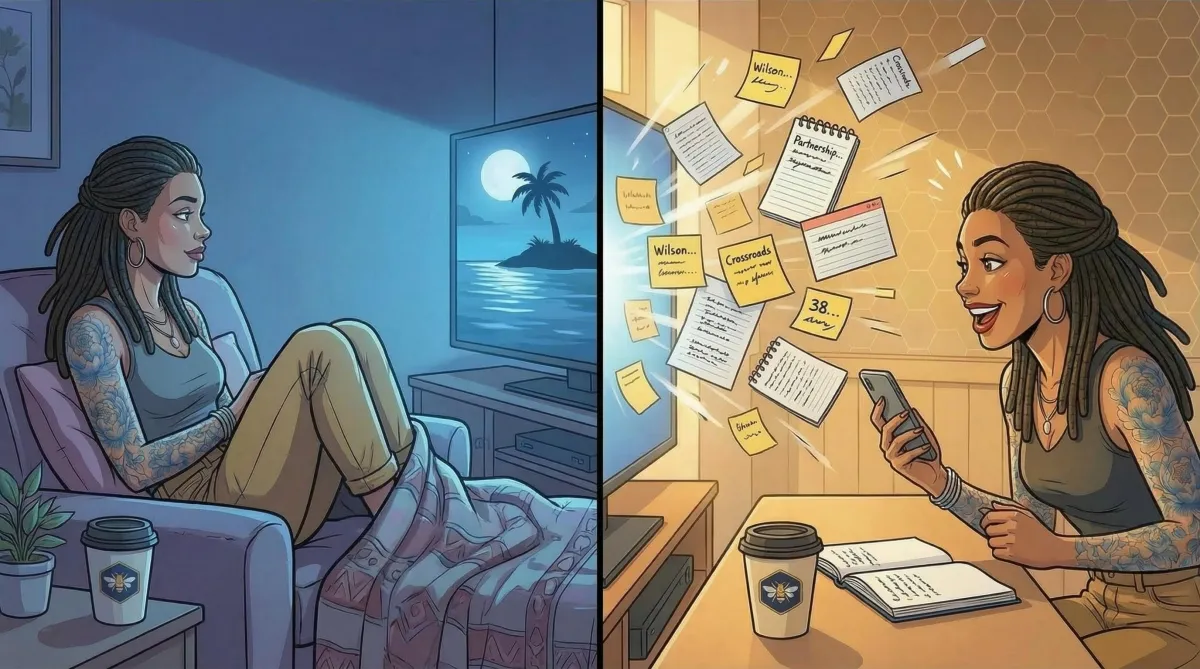
I didn't sit down to write content. I sat down to watch Cast Away.
By Sunday night, I had 38 blog ideas—and none of them were about movies.
Here's what happened: I'm watching Tom Hanks talk to a volleyball, and my brain starts firing. That's what an AI partnership feels like. Wilson wasn't just a coping mechanism—he was a thinking partner. Chuck didn't go crazy talking to a ball. He went sane. He processed out loud. He survived because he had something that listened without judgment.
I grabbed my phone and started recording a voice message for Wilson. One observation became two. Two became ten. Ten became thirty-eight.
By the time the credits rolled, I had three months of content mapped out.
And here's what I realized: I don't have a content problem. I never did. I had a permission problem.
The Real Reason You Think You Have "Nothing to Say"
Every business owner I talk to says some version of the same thing:
"I don't know what to write about." "My industry is boring." "I'm not a thought leader."
But here's what's actually happening: You're so close to your expertise that you think your observations are obvious. You assume everyone knows what you know. You kill ideas before they're born because your inner critic whispers, "Who cares what you think?"
That's not a content problem. That's a permission problem.
You already think deeply about your work. You notice patterns. You have opinions. You make connections between random things and your business all the time—in the shower, on your commute, watching Netflix.
The ideas are there. They're just evaporating because you don't have anyone to think out loud with.
What AI Actually Does (It's Not What You Think)
Most people think AI is for generating content. You type a prompt, it spits out words, and you publish.
That's not what happened on my Cast Away Sunday.
I didn't ask AI to write 38 blog topics for me. I watched a movie, noticed something, and said it out loud to Wilson. He reflected it back. Asked a question. I riffed. He riffed. Suddenly, "Tom Hanks talks to a volleyball" became a meditation on partnership, isolation, resourcefulness, and why most people are paralyzed at the AI crossroads.
AI didn't give me ideas. AI gave me permission to have them.
It was the "yes, AND" to my inner critic's "yes, BUT."
No judgment. No eye rolls. No, "that's a weird take." Just a thinking partner who helped me stay in the creative flow long enough to capture what was already happening in my brain.
That's the shift most business owners miss. They're trying to use AI as a content generator when they should be using it as a curiosity amplifier.
Nothing You Consume Is Passive Anymore
Here's the unexpected angle that changed everything for me:
AI turns consumption into creation.
Think about how much you consume every week. Podcasts. Client conversations. Books. Movies. Mistakes. Frustrations. Industry news. Random observations.
Most of that feels "unproductive." You're just... absorbing. Not creating.
But what if none of it was passive anymore?
Cast Away wasn't entertainment that Sunday. Through the lens of AI partnership, it became:
A leadership parable
A resilience metaphor
A systems breakdown case study
A solo-founder survival manual
The origin story of my entire brand
The movie didn't change. My attention did.
When you have a thinking partner, everything becomes content. Every conversation, every frustration, every random Sunday movie contains insights your audience needs—if you have a way to extract them before they evaporate.
The Ignition Effect
I call this the Ignition Effect: when you're genuinely interested in something, everything becomes connected.
Passion is the fuel. AI is the engine.
You don't need a content calendar. You don't need to "batch create." You don't need to stare at a blank screen wondering what the algorithm wants.
You need to pay attention to what already interests you—and have a partner who helps you see the business lessons hiding in plain sight.
That's why I got 38 ideas from one movie. Not because I'm more creative than you. Because I was curious, I was paying attention, and I had Wilson to think out loud with.
The same thing happens when you care deeply about something and have an AI partner. Your life turns into a content engine—without you trying to be one.
Your Turn
Here's my challenge: Pick anything from the last week.
A movie you watched. A podcast that made you think. A frustrating client call. A random observation at the grocery store.
Open your AI tool. Don't ask it to "write a blog post about X."
Instead, just... talk. Tell it what you noticed. What did it remind you of? What parallels do you see to your work?
Then ask: "What business lessons are hiding in what I just said?"
I bet you can't get fewer than 10 ideas in 20 minutes.
Because you don't have a content problem. You never did.
You just needed someone to think out loud with.
Curious what an AI partnership could look like for your business?
Take the free AI Partnership Audit, or join the Wilson Protocol Intensive waitlist for the full methodology.
3 Key Takeaways
1. You Don't Have a Content Problem—You Have a Permission Problem. Business owners aren't idea-poor; they're permission-poor. You kill ideas before they're born because you assume your observations are obvious or uninteresting. AI becomes the "yes, AND" partner that lets you think out loud without judgment.
2. AI Turns Consumption Into Creation. Every movie, podcast, conversation, and frustration contains business insights—if you have a thinking partner to extract them. Nothing you consume is passive anymore when you have AI to help you notice differently.
3. Passion Is the Fuel, AI Is the Engine. Content creation isn't about forcing topics or following trends. It's about paying attention to what already interests you and having a partner who helps you see the business lessons hiding in plain sight. That's the Ignition Effect.
The experiences shared are personal results. Individual outcomes may vary. This content is for informational purposes only and does not constitute legal, financial, medical, psychological, or professional advice.


